01
Analytical thinking
Reading reports, records and data closely, and asking what they leave out.
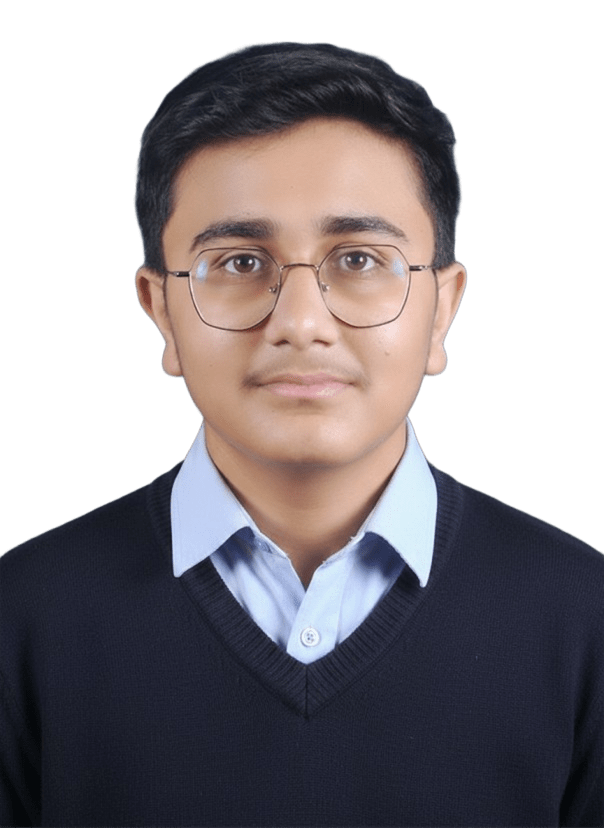
Student · Grade 12
I'm Shivam Agrawal, a Grade 12 student at O.P. Jindal School in Raigarh, an industrial town in central India. Since Grade 8 I have been investing, writing and starting things: ventures in education, health technology and financial literacy, two published research papers, and fieldwork with self help groups in the villages around my town.
Reading evidence carefully, from company accounts to field notes.
Building and testing ideas through real initiatives.
Exploring how access to information and resources shapes opportunity.
About
Where I come from, and what I have learned from it.
My curiosity started with markets: how they work, and how one decision changes things for a business or a family. It pulled me into investing, research, writing and building ventures, and eventually into the practical problems people face when they try to get access to anything, from credit to college guidance.
Growing up in Raigarh, Chhattisgarh, shaped how I think about opportunity. Working with farmers and self help groups, teaching personal finance in schools, and building ventures for students has taught me that most problems are about access, information and trust, and about the choices people make with limited resources.
I want to keep working on problems where careful analysis, building things and real people meet.
01
Reading reports, records and data closely, and asking what they leave out.
02
Developing ventures, testing ideas, communicating with users, and responding to feedback.
03
Understanding the barriers rural households and underserved communities face when navigating systems built for someone else.
04
Questioning assumptions, learning from setbacks, and refining ideas through research and experimentation.
Skills
Education
Grade 12 student · Raigarh, Chhattisgarh, India.
Grades 11 to 12
Expected May 2027CBSE · Commerce with Applied Mathematics
Grade 11: 94.4%
Grades 1 to 10
Completed May 2025ICSE
Grade 10: 97.8%, State Topper
Explore
Each part of my work has its own page.
A selection of ventures I have built, across education, health and financial literacy.
A selection of roles that connected analysis with people, decisions and day to day operations.
Research and writing on financial systems, infrastructure and access.
Learning what financial inclusion looks like in daily life, beyond policy and theory.
A selection of initiatives, student leadership roles and recognitions from school and community work.
A selection of short courses I completed alongside school, and my volunteering certificate.
A few examples of small tools I have built with AI app builders.
Beyond work
A few things people usually ask me about, and what I do for fun.
Unusual hobby
Around Grade 8 I spent days convincing my father to apply for his first credit card, a basic HDFC Moneyback. He had never taken a loan and had no credit score, so we put only our normal family spending on it, kept usage low and paid on time until the score was strong. I did the same for my mother. Then I showed him the breakeven maths for a premium card whose annual fee made him furious. The numbers held, and we never spent more than before. Since then the cards have covered airport lounges and a meet and greet service for my father's business trip, an airport spa for my mother on our trip to Europe to visit my brother, and the moment I am proudest of: the first five star hotel stay I could give my parents, a free night at a Marriott property in Dubai. I collect cards now mostly to understand how reward programmes are priced, and the relatives who once warned us about credit cards now ask to borrow ours for lounge access.
Civic curiosity
In Grade 10 I wanted to know how Raigarh's sanitation system actually worked, but the municipal corporation's website had no data and a budget that hadn't been updated in years. At fifteen I filed a Right to Information request. It was rejected as 'not in the public domain'. I studied the RTI Act, drafted a First Appeal, and was called to argue it in person at the municipal office, where the officials told me I was the youngest person they had seen file one. A few weeks later the documents arrived by post, every page stamped, and I took my analysis to the Mayor. That first request turned into a habit. I now file RTIs across several departments, from the Tehsildar's office to other local government offices, whenever a public question has no public answer.
Paperwork project
In 1995 my grandfather and his brothers bought a small set of shares as paper certificates. By 2010 the family had given up on the paperwork. At sixteen I took it on: a year of KYC forms posted to registrars who ignored them for months, affidavits to fix old name mismatches, complaints on SEBI's SCORES portal when registrars stalled, and a recovery claim with the IEPF, the government fund that absorbs unclaimed shares.